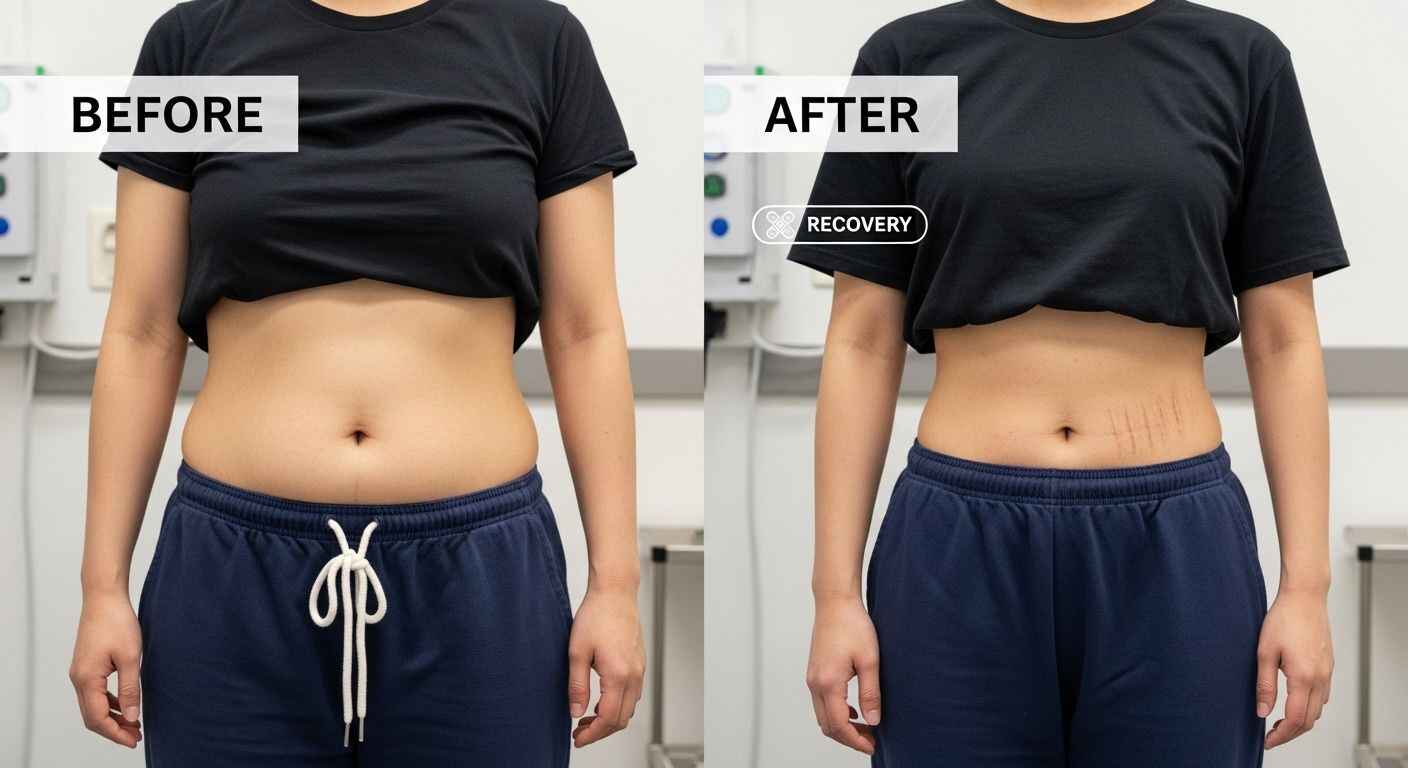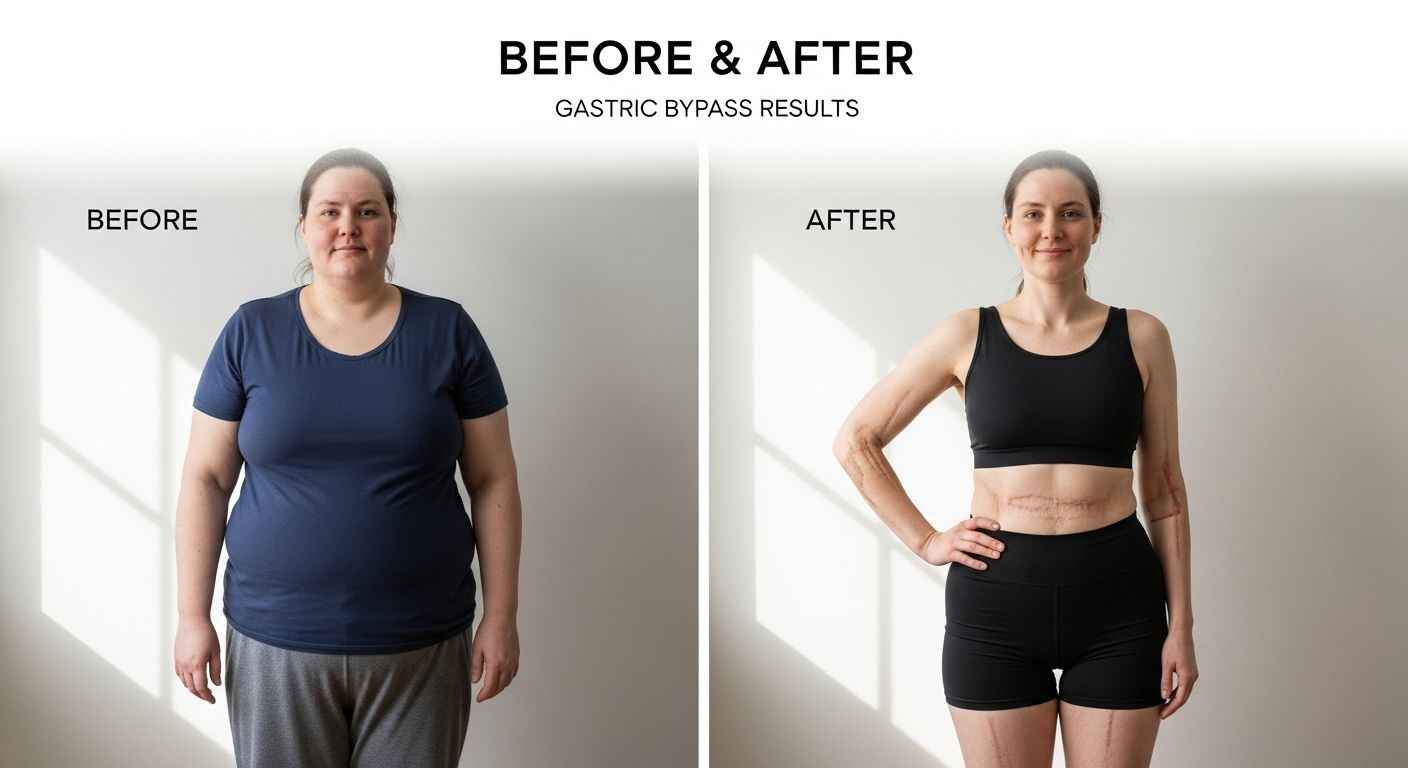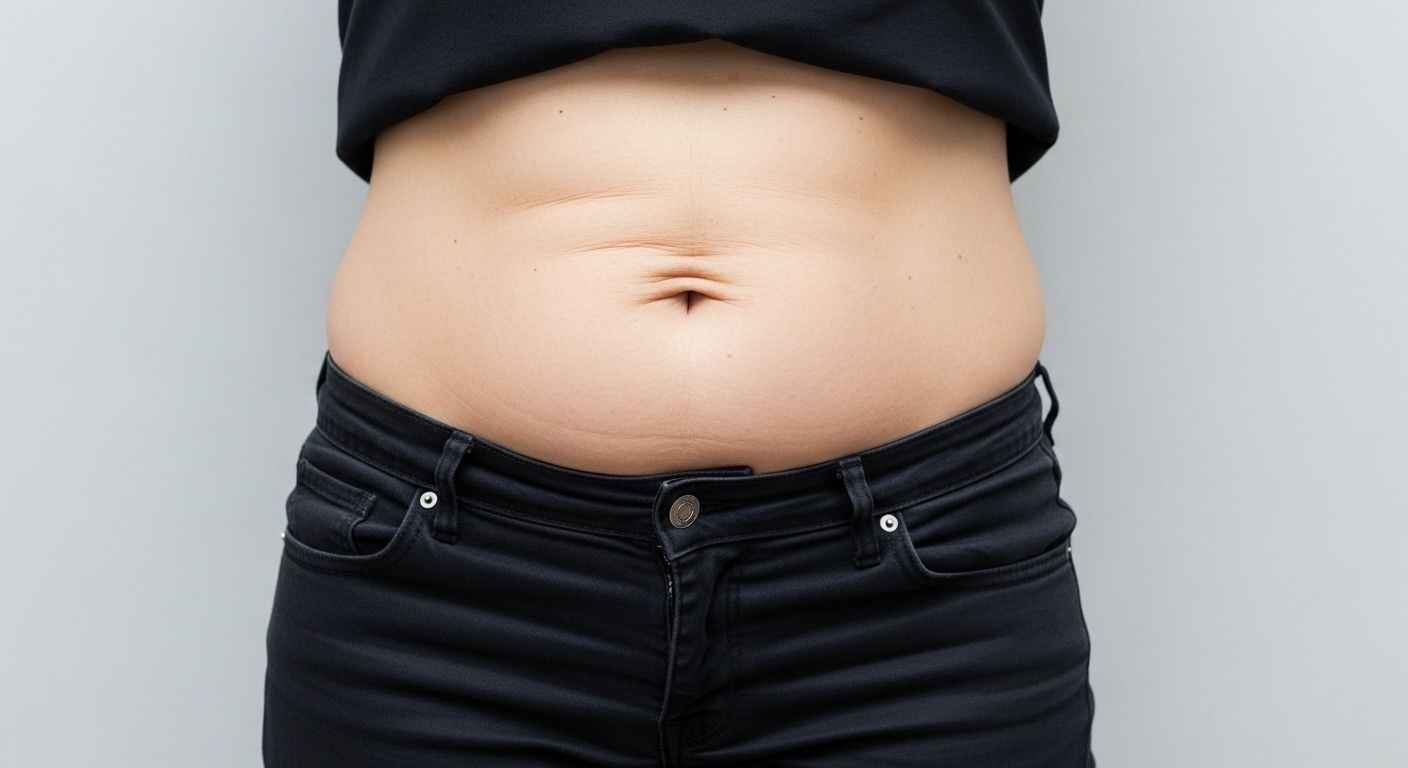
Real pictures of loose skin after liposuction show how skin elasticity affects results and help set realistic expectations before treatment.
What Causes Loose Skin After Liposuction
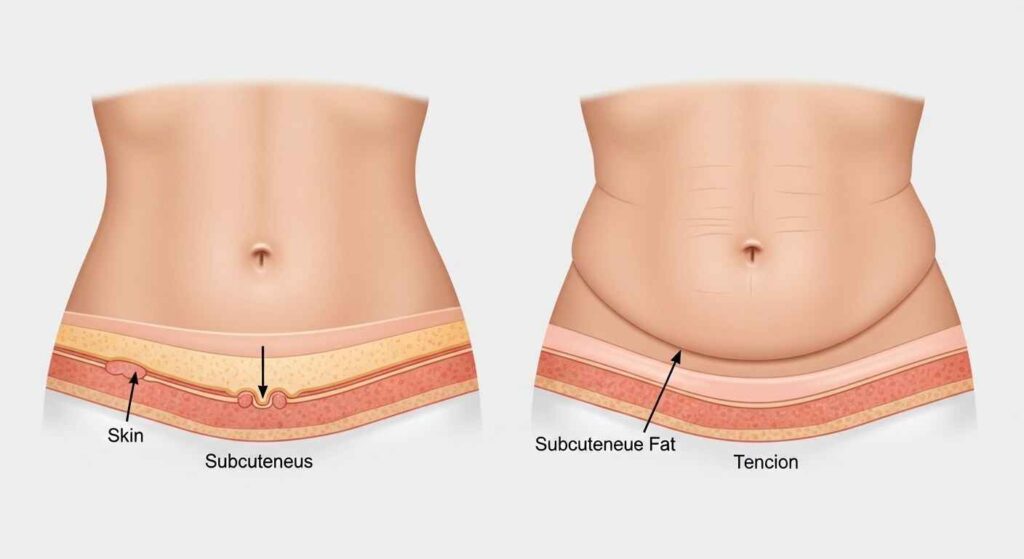
The main reason for loose skin after liposuction is a mismatch between fat removal and skin elasticity. When fat is removed from areas such as the abdomen, thighs, arms, or flanks, the skin may not fully retract. This leads to visible sagging, which is why many patients look at pictures of loose skin after liposuction to understand realistic outcomes. Factors like age, genetics, sun damage, and the amount of fat removed all influence skin retraction. Larger fat removal increases the risk of post-lipoplasty loose skin, especially when collagen levels are reduced.
Before & After Images: Real Examples
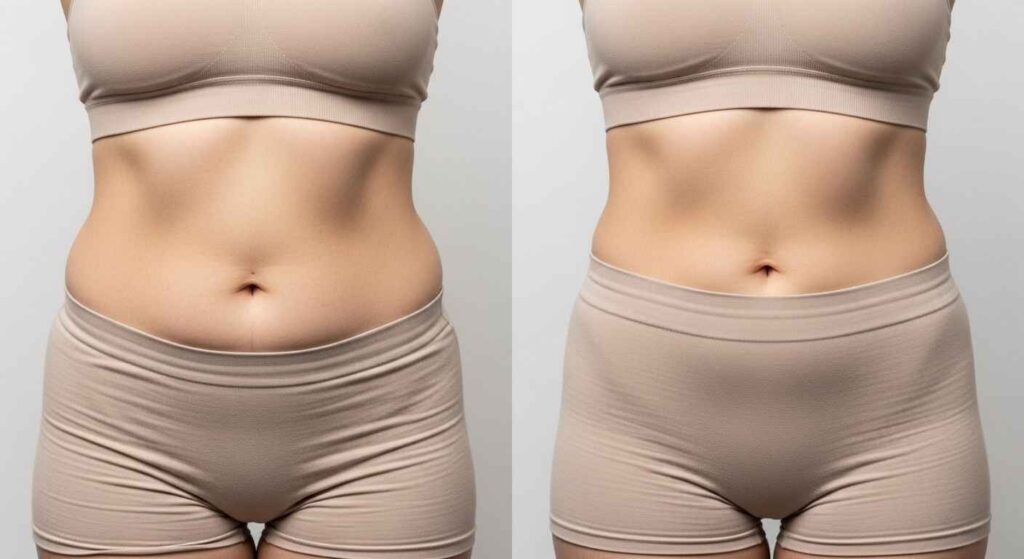
Seeing real pictures of loose skin after liposuction helps patients understand what outcomes actually look like. Written descriptions can explain sagging, but visual examples show the true impact of skin elasticity after fat removal across different body areas.
Abdomen
The abdomen is a common treatment area and often shows mild to moderate laxity. Post-lipoplasty loose skin may appear as subtle folds or more noticeable hanging tissue, depending on age, skin quality, and fat volume removed. Comparing liposuction before and after photos helps illustrate how elasticity affects contour.
Flanks & Love Handles
The flanks typically respond better due to thicker dermal layers, though minor laxity can remain. Loose skin liposuction images in this area highlight differences in skin recoil between patients.
Arms & Thighs
Arms and inner thighs are more prone to post-liposuction sagging skin because the skin is thinner. Some patients pursue skin tightening options to improve contour in these areas.
Evaluating Results
Check timelines, photo consistency, body area differences, and multiple patient examples. Reviewing a reliable liposuction outcomes gallery provides a realistic view of post-liposuction body contouring results and helps set informed expectations.
| Body Area / Section | Key Points / Notes | Purpose / Takeaway |
|---|---|---|
| Introduction | Real pictures show true results; text alone cannot convey sagging or skin elasticity | Helps patients understand realistic outcomes after liposuction |
| Abdomen | Skin may look slightly loose or sag after liposuction, depending on elasticity and fat removed. Before-and-after photos help show realistic results. | Shows how elasticity affects contour and sets expectations |
| Flanks & Love Handles | Often respond better due to thicker dermal layers; minor laxity can remain; loose skin images highlight differences | Illustrates variability in skin recoil between patients |
How to Evaluate Before & After Photos
Not all pictures of loose skin after liposuction show the complete picture, so careful evaluation is essential. Immediate post-op photos often exaggerate sagging due to swelling, while skin retraction can continue for 3–12 months. Reviewing staged liposuction before and after photos gives a more accurate sense of results. Lighting, angles, and posture can also distort post-liposuction body contouring results. Different areas respond differently, and skin elasticity after fat removal varies by age and genetics. Always rely on consistent, verified galleries when assessing post-lipoplasty loose skin and possible skin tightening options.
Treatment Options for Loose Skin Post-Lipo
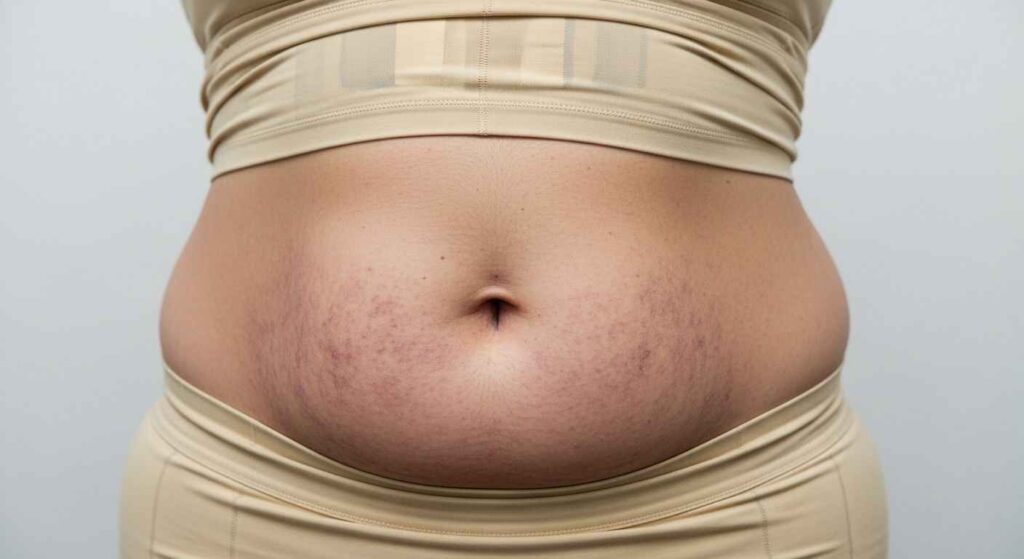
Loose skin after liposuction usually requires specific treatment because fat removal alone does not tighten skin. Reviewing pictures of loose skin after liposuction helps set realistic expectations before choosing an approach.
For mild sagging, non-surgical options like radiofrequency, ultrasound, or laser treatments can stimulate collagen and improve skin retraction after fat removal. These work best in patients with good natural elasticity and require multiple sessions to enhance post-lipoplasty results.
When laxity is significant, surgical procedures such as a tummy tuck, body lift, or arm lift remove excess skin and deliver more dramatic improvement. In some cases, surgeons combine liposuction with skin tightening to reduce the risk of visible sagging.
Final outcomes depend on age, genetics, and skin quality. Reviewing liposuction before and after photos and assessing post-liposuction body contouring results carefully ensures patients choose the right solution for post-liposuction sagging skin.
Real Patient Stories / Insights
Loose skin after liposuction varies significantly based on age, genetics, and skin elasticity. Some patients see smooth results within months, while others notice mild sagging, particularly in the abdomen, arms, or thighs. Reviewing pictures of loose skin after liposuction alongside real experiences helps set realistic expectations.
Swelling and temporary looseness are common early on, but skin retraction after fat removal can improve over 3–12 months. For persistent laxity, some patients explore skin tightening options or surgical lifts. Comparing liposuction before and after photos helps assess what realistic post-liposuction body contouring results may look like for individual cases.
Risks & Limitations
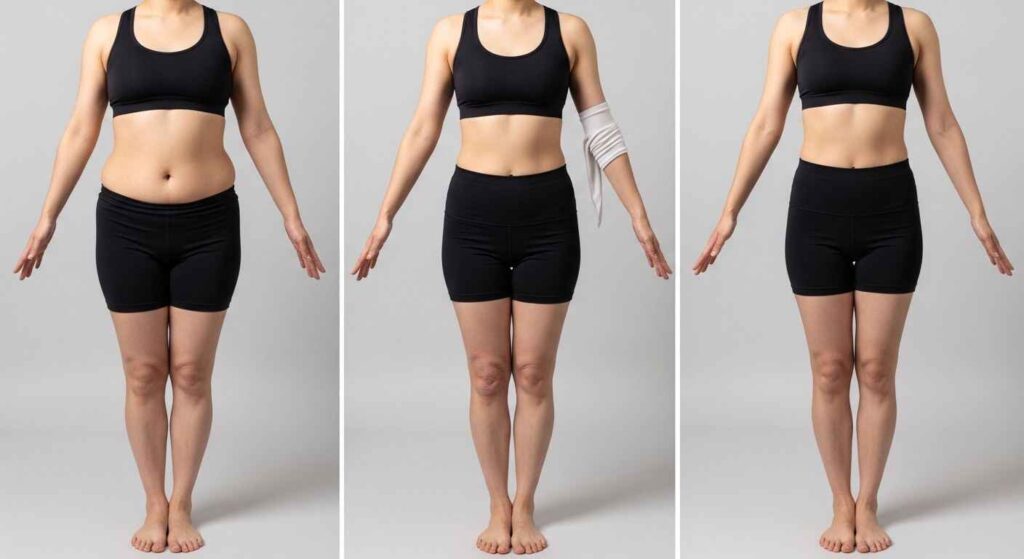
Liposuction removes fat but does not fix poor skin elasticity or excess skin. This is a common misunderstanding seen when people review pictures of loose skin after liposuction.
Mild laxity often improves over several months as swelling subsides and skin retraction after fat removal occurs. However, patients with low collagen levels, previous weight loss, or stretched skin may notice more persistent sagging. Arms, inner thighs, and the lower abdomen are especially prone to post-liposuction sagging skin, particularly after large-volume fat removal.
Liposuction is a contouring procedure—not a skin-tightening solution. Reviewing liposuction before and after photos carefully helps set realistic expectations. When laxity is significant, additional skin tightening options or surgical removal may be required to achieve smoother post-liposuction body contouring results.
Frequently Asked Questions
Most concerns about loose skin after liposuction come down to expectations versus reality.
Does liposuction always cause loose skin?
No. It depends on age, genetics, and skin elasticity. Patients with strong collagen support often experience natural tightening, while others may notice mild sagging. Reviewing pictures of loose skin after liposuction helps clarify the range of normal outcomes.
How long does skin take to tighten after liposuction?
Skin retraction after fat removal can continue for 3–12 months. Early swelling may make laxity appear worse before gradual improvement.
Can exercise tighten loose skin after lipo?
Exercise strengthens muscle but does not significantly tighten excess skin. It can improve overall contour but will not eliminate post-liposuction sagging skin.
When is surgery needed for loose skin?
If laxity is moderate to severe, procedures such as a tummy tuck or arm lift may be necessary. Non-surgical skin tightening options provide mild improvement but are limited in cases of significant excess tissue.
How should I evaluate results?
Study liposuction before and after photos carefully, paying attention to timelines and body area differences. Compare realistic post-liposuction body contouring results rather than idealized examples.

Written by Malik Umar, a skincare expert with over 40 years of experience in health and beauty research. At the age of 65, he combines traditional wisdom with modern dermatology insights to help readers achieve healthy, glowing skin. His mission at Skin Hub is to make skincare knowledge simple, accessible, and effective for everyone.